

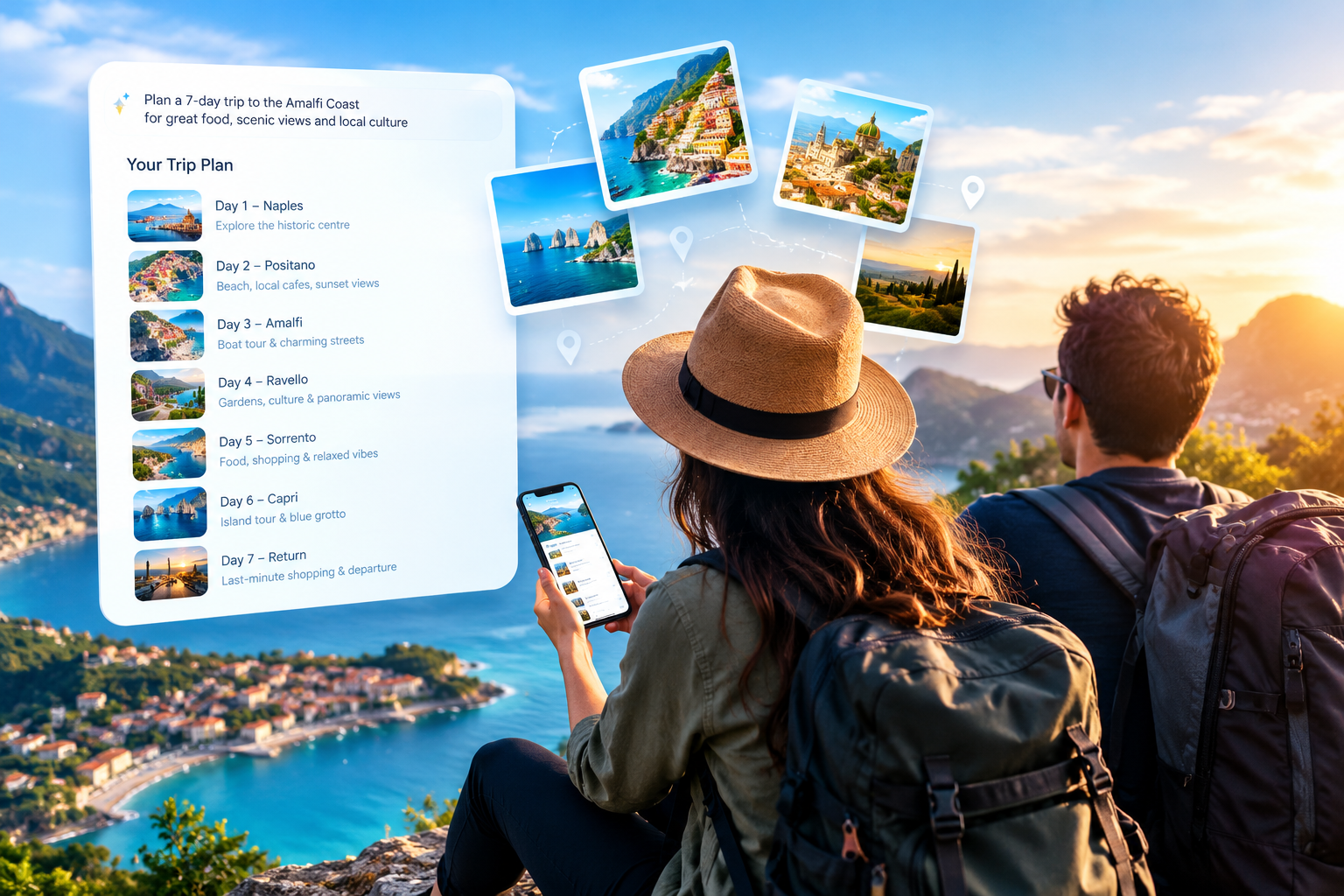
Planning a holiday should be exciting. Yet before the journey begins, travellers often spend hours comparing attractions, researching destinations, checking transport options and trying to organise everything into a realistic schedule.
The challenge is not finding information. It is turning that information into a practical, personalised itinerary that fits the traveller’s interests, budget and available time.
Mandro, founded by Adam Cohen, is using artificial intelligence to simplify this process. Its AI-powered travel planner transforms travellers’ preferences into detailed, day-by-day itineraries, bringing together destination discovery, route planning, local recommendations and practical travel guidance.
The goal is to make planning a memorable trip simpler, faster and more enjoyable.
Rather than starting with a blank document and researching every stop manually, travellers can use Mandro to generate an initial itinerary, customise the details and save their plan for use during the journey.
For StartupANZ, Mandro illustrates how AI can be applied to a familiar consumer problem: helping people spend less time organising a holiday and more time enjoying the experience.
The Founder: Adam Cohen and the Opportunity in Travel Technology
Adam Cohen is the founder of Mandro, a travel technology startup based in the United States.
The company’s central idea is to use AI to turn travel preferences into organised itineraries. Users can specify their destination, travel dates and interests, then use the platform to develop a structured plan for their trip.
The founding questionnaire identifies the need for a simpler way to discover places and organise travel plans as the central problem Mandro seeks to solve.
Although the supplied information does not detail Cohen’s personal background or the specific circumstances that led him to establish the company, the product reflects an opportunity to make a traditionally fragmented process more accessible through a dedicated AI-powered platform.
The Problem: Turning Travel Inspiration Into a Workable Plan
Travellers today have access to an enormous amount of information. They can browse destination guides, watch travel videos, read reviews, explore maps and ask AI assistants for recommendations.
Yet information alone does not produce a good itinerary.
Consider someone planning three days in London. They might want to visit historic landmarks, explore museums, discover local food and experience the city’s cultural attractions.
The challenge is deciding which places to visit each day, how much time to spend at each stop and how to travel between locations.
A plan that looks appealing on paper may prove unrealistic once journey times, opening hours and queues are taken into account.
The same problem affects families organising holidays, couples planning city breaks, solo travellers exploring unfamiliar destinations and remote workers combining work with travel.
Mandro addresses this challenge by bringing itinerary generation and practical planning tools together.
Users can enter their destination and travel dates, select their interests and adjust preferences such as budget and transport. The platform then generates a day-by-day itinerary that they can review and customise.
The aim is to give travellers a useful starting point without requiring them to conduct all the research and organisation manually.
The Solution: A Personal Travel Planner Powered by AI
Mandro is designed to help travellers move from an initial idea to an organised itinerary.
The platform combines AI-generated recommendations with maps, transport guidance, local tips and downloadable plans.
Its approach is based on a simple principle: travel planning should reflect the person taking the trip rather than rely on a generic list of popular attractions.
A traveller interested in architecture and museums may want a different itinerary from someone who prefers food markets, outdoor activities and local neighbourhoods.
By using personal preferences as inputs, Mandro aims to make travel planning more relevant to each user. The resulting itinerary can then be adjusted as priorities change.
How Mandro Works
1. Generate a Personalised Itinerary
Users enter their destination, travel dates and interests. Additional options allow them to specify a budget range and preferred mode of transport.
Mandro uses these details to generate a structured itinerary organised by day, helping users move from a broad travel idea to a more concrete plan.
For example, someone visiting Paris for a short break might want to combine museums, historic landmarks, neighbourhood walks and local food experiences. Mandro can help organise these interests into a proposed schedule.
Users should still check that the suggested timings, opening hours and travel arrangements are realistic before finalising their plans.
2. Explore Stops on an Interactive Map
A list of attractions is only part of a useful travel plan. Understanding where those attractions are located is equally important.
Mandro includes an interactive map with pins for itinerary stops. Users can also open a day’s route in Google Maps to examine the journey between locations.
This helps travellers understand the geography of their plans and identify opportunities to group nearby attractions.
A well-organised itinerary can reduce unnecessary travel and leave more time for sightseeing. Actual journey times and transport arrangements should be verified before departure.
3. Discover Local Tips and Hidden Gems
Popular attractions are often easy to find. Discovering neighbourhood experiences, local food and less obvious places can require additional research.
Mandro incorporates local tips and destination guidance into its planning experience. Its website also features curated travel itineraries and destination guides covering cities such as London, Paris, Barcelona, Tokyo and Bangkok.
These resources give travellers ideas beyond the standard checklist of famous landmarks and help them explore destinations according to their interests.
As with any AI-generated recommendation, opening hours, availability and local conditions should be confirmed before making bookings or travelling.
4. Get Transport, Weather and Packing Guidance
Travel planning involves more than choosing attractions. Travellers also need to consider how they will move between locations, what the weather might be like and what they should bring.
Mandro includes transport recommendations, weather guidance and packing suggestions tailored to the trip.
These features connect the sightseeing schedule with the practical preparation required for the journey. However, travellers should verify current forecasts, transport schedules and local conditions before departure.
5. Save the Itinerary for Offline Use
A travel plan is most useful when it remains accessible during the journey.
Mandro allows users to export itineraries as PDFs, which can be saved on a device or shared with fellow travellers.
This is particularly useful for families and groups, where several people may need access to the same plan, or for travellers who expect unreliable internet connectivity.
By combining itinerary generation with downloadable output, Mandro makes its recommendations easier to use beyond the initial planning session.
More Than a General-Purpose AI Assistant
Travellers can already ask general-purpose AI tools to suggest destinations, recommend attractions and create sample itineraries.
Mandro’s opportunity is to provide a dedicated workflow built specifically around travel planning.
Its value proposition is not simply that it uses AI, but that it organises recommendations into a day-by-day plan supported by practical travel tools.
The platform brings together:
- Personalised itinerary generation.
- Interactive maps with location pins.
- Links to daily routes in Google Maps.
- Local tips and destination guides.
- Transport recommendations.
- Weather and packing guidance.
- PDF exports for offline access.
- Travel route-conversion utilities.
Mandro also provides online tools for working with route formats such as GPX and KML, helping users move route information between supported mapping applications and formats.
These capabilities extend the product beyond generating a simple list of places. The broader opportunity is to make AI-generated travel recommendations easier to organise, review, save and use in the real world.
The Business Model: Flexible Pricing for Different Travellers
Mandro offers three access options on its published pricing page: a seven-day travel pass, a monthly subscription and a yearly subscription.
| Plan | Price | Intended use |
|---|---|---|
| 7-Day Travel Pass | US$4.99, one-time payment | Planning an upcoming holiday |
| Monthly | US$5.99 per month | Travellers who want ongoing access |
| Yearly | US$36 per year | Frequent travellers planning multiple trips |
The seven-day pass is designed for people who want to plan one or more trips without committing to an ongoing subscription.
Monthly and yearly plans cater to users who want continued access, with the yearly option offering a lower equivalent monthly cost.
The plans include itinerary generation and PDF export, while some additional benefits vary by subscription.
This approach recognises that travellers have different usage patterns. Some may need the platform only before an annual holiday, while others plan several trips throughout the year.
The challenge for Mandro is to maintain accessible pricing while covering the costs of AI generation, mapping and the services required to support the platform.
Who Is Mandro Designed For?
Mandro’s product is relevant to several types of travellers.
Holidaymakers
People planning city breaks or longer holidays can use the platform to organise attractions, activities and transport into a structured schedule.
Families and Groups
A shared itinerary can help travellers coordinate activities, discuss priorities and keep a common plan available throughout the journey. The schedule should still account for individual preferences, accessibility requirements and rest periods.
Solo Travellers
People exploring a destination alone may appreciate having an organised plan that combines sightseeing, transport suggestions and local guidance.
Workation Travellers
Remote workers combining work with travel may need to fit activities around professional commitments. A structured itinerary can help them organise their available free time.
Frequent Travellers
People who regularly visit new destinations may benefit from continued access to planning tools and a collection of travel ideas.
Across these audiences, the shared need is to reduce the time and effort required to turn travel inspiration into a practical itinerary.
Building Trust in AI-Powered Travel Planning
AI can simplify travel planning, but accuracy remains important.
An attraction may change its opening hours, a restaurant may close, or a transport route may be disrupted. Suggested schedules may also underestimate the time required to move between places.
Mandro advises users to treat generated itineraries as a starting point and verify time-sensitive information before booking or travelling. Its terms of service explain that the platform provides travel-planning information rather than directly booking flights, accommodation or tours.
This distinction matters because AI-generated recommendations should not be treated as guaranteed travel information.
Mandro’s value lies in helping users organise a trip more efficiently, while travellers remain responsible for confirming details and making their final decisions.
Trust will be important to the product’s continued development. Users need a convenient planning experience, but they also need to understand the limitations of automated recommendations.
The Startup Challenge: Standing Out in a Competitive Market
AI-powered travel planning is a competitive market. Travellers can choose from general-purpose AI assistants, established travel websites, mapping applications and specialist itinerary tools.
Mandro must therefore demonstrate why a dedicated platform is useful beyond the alternatives people already have.
Its positioning rests on bringing multiple planning functions together: personalised itineraries, maps, route links, local guidance, transport recommendations, weather and packing information, and downloadable plans.
Several factors are likely to influence the company’s development.
Recommendation quality: Itineraries need to reflect user preferences, available time and practical constraints.
Route planning: Suggested schedules should group locations sensibly and avoid unrealistic travel expectations.
Information accuracy: Users need clear guidance about which details require confirmation before departure.
Customer retention: The platform must provide enough ongoing value to encourage repeat use, particularly among subscribers.
Sustainable pricing: Subscription revenue must support the costs of running the service while remaining attractive to travellers.
These are strategic considerations for a travel-technology startup competing in a rapidly evolving AI market, rather than claims about Mandro’s internal performance.

Three Lessons for Aspiring Entrepreneurs
Mandro’s product strategy illustrates three useful lessons for founders building AI-powered consumer products.
1. Solve the Complete Customer Problem
Generating a list of attractions is only one part of planning a trip. Travellers also need to organise locations, consider transport, prepare for the weather and keep their plans accessible.
Mandro combines these elements into a connected workflow.
The lesson for entrepreneurs is to understand what customers need to accomplish from beginning to end, then design the product around that broader outcome.
2. Make AI Outputs Practical
An AI-generated answer is more valuable when users can act on it.
Mandro connects itinerary suggestions with interactive maps, Google Maps routes and downloadable plans. These features make the output easier to use than a simple block of generated text.
For other founders, the lesson is to think beyond content generation. Integrations, useful formats and practical workflows can turn AI capabilities into a product that solves a real problem.
3. Match Pricing to Customer Behaviour
Not every traveller plans trips throughout the year.
Mandro’s seven-day pass serves users preparing for an upcoming journey, while its monthly and yearly subscriptions cater to people who want ongoing access.
The lesson is to consider how frequently customers use a product and design pricing accordingly. The business must then balance flexibility and affordability with the cost of providing a reliable service.
(These lessons are editorial observations based on Mandro’s product and business model.)
Looking Ahead: Making Travel Planning More Enjoyable
Travel is about discovery, experience and the opportunity to explore somewhere new. Yet the administrative work involved in planning a journey can consume hours that travellers would rather spend elsewhere.
Mandro is building around that gap.
The company offers an AI-powered travel planner that transforms destinations, dates and personal interests into structured itineraries. Its supporting features bring together maps, local recommendations, transport guidance, weather and packing information, and offline exports.
The opportunity is to make these capabilities work together as a convenient, personalised planning experience.
Mandro’s future success will depend on the usefulness of its recommendations, the reliability of its practical guidance, the quality of its user experience and its ability to give travellers a reason to return.
For aspiring entrepreneurs, the broader lesson is that AI can create value by simplifying a familiar task. Rather than asking users to begin with a blank page, a well-designed AI product can provide a useful starting point that people can review and adapt to their needs.
For travellers, the promise is straightforward: less time assembling information, more time preparing for the journey and enjoying the destination.
Company Profile
Startup: Mandro
Founder: Adam Cohen
Location: United States
Team size: 1–5 employees
Industry: Artificial intelligence, travel technology and consumer software
Product: AI-powered travel planner
Core features: Personalised itineraries, interactive maps, local tips, transport recommendations, weather and packing guidance, PDF exports and route-conversion tools
Target customers: Holidaymakers, solo travellers, families, groups, workation travellers and frequent travellers
Business model: Seven-day access pass, monthly subscription and yearly subscription
Website: https://www.mandro.ai/
Pricing: https://www.mandro.ai/pricing
Contact: social@mandro.ai
(Note: StartupANZ Spotlight profiles founders and emerging businesses using technology to solve practical problems and improve everyday experiences. Editorial note: Product capabilities and pricing are based on Mandro’s published website. The founder’s name, location and team size come from the supplied questionnaire.)