

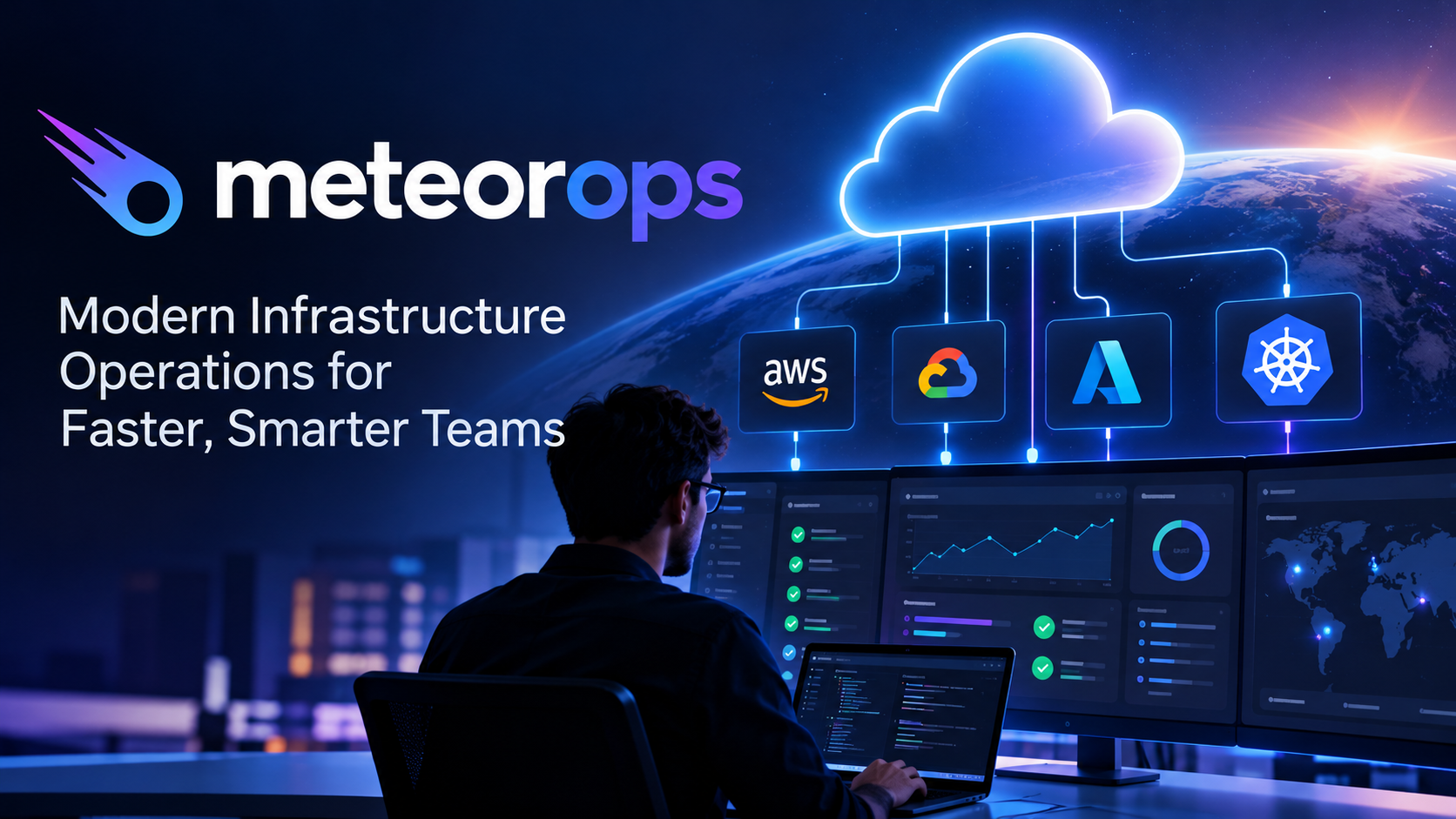
How founders Michael Zion and Arthur Azrieli built an engineering business around a simple principle: giving companies direct access to senior engineering expertise without the delays and complexity of traditional consulting.
In 2020, Michael Zion had a goal written on a piece of paper and placed on his fridge: to earn more than twice his existing monthly income.
At the time, he could not have known that an unexpected freelance engineering project would become the starting point for a much larger business. What began as evening work on other companies’ production systems would eventually develop into MeteorOps, an engineering company providing DevOps, cloud infrastructure and platform engineering services.
The journey was about more than finding additional clients. It was about discovering how to turn individual technical expertise into a dependable business—one capable of serving multiple companies without relying entirely on a single engineer’s time.
Founded by Zion and his former startup colleague Arthur Azrieli, MeteorOps has built its business around direct access to experienced engineers, architectural oversight and flexible engagement models. Its approach is designed for companies that need hands-on technical expertise rather than recommendations that someone else must implement.
Today, MeteorOps reports a team of approximately 75 people across 22 countries and more than 120 client companies served. These figures are published on the company’s website.
Behind those numbers is a story of ambition, partnership, technical problem-solving and the challenges of building a business that can grow beyond its founders.
The Beginning: A Goal, a Fridge and an Unexpected Opportunity
Every startup has an origin story. Sometimes it begins with a major industry problem or a carefully developed business plan. For MeteorOps, the starting point was more personal.
According to the company’s published account, remote work in 2020 gave Zion approximately two additional hours each day. A roommate encouraged him to set a financial goal for the year, and Zion decided he wanted to earn more than twice his existing monthly income.
He wrote down the goal and put it on the fridge.
A week later, a friend visited to play guitar and left behind Zion’s first freelance DevOps project.
The opportunity allowed Zion to explore whether his engineering skills could generate income outside his regular job. He began working evenings on production systems for other companies, effectively taking on a second shift.
It was a practical beginning. There were projects to deliver, production systems to maintain and clients relying on him to keep their technology running.
As the freelance work grew, Zion recognised that businesses needed the expertise he could provide. What began as an additional source of income gradually developed into a potential business.
The question was whether that demand could support something larger than a one-person operation.
That question marked the beginning of MeteorOps.
The First Major Decision: Moving Beyond Freelancing
Freelancing can be an attractive route into entrepreneurship. It allows skilled professionals to test market demand, build customer relationships and generate revenue without immediately establishing a large organisation.
However, a freelance business has a natural limitation: its capacity depends heavily on the individual delivering the work.
There are only so many hours one person can sell. Projects can overlap, clients may need assistance simultaneously, and production systems still require attention when the engineer is occupied elsewhere.
MeteorOps’ company story describes how Zion’s workload eventually exceeded what he could manage alone. He left his job, hired the first engineer and introduced MeteorOps to the market.
This marked an important transition—from selling personal expertise to building an organisation capable of delivering that expertise through a team.
It also introduced a different set of responsibilities. A founder who hires employees must ensure there is sufficient work, maintain service quality and build a business that can support its people.
MeteorOps needed to become more than the professional reputation of its founder. It needed a repeatable way to serve clients, coordinate work and maintain technical standards.
The challenge was no longer simply finding another project. It was building a business capable of delivering consistently as demand increased.
The Partnership That Changed the Company’s Direction
The next important chapter involved Arthur Azrieli, a former startup colleague of Zion.
MeteorOps’ published history describes Azrieli as a highly driven engineer whose work rate earned him the nickname “The Machine.” The two decided to test their partnership over six months.
Their objective was straightforward: find exceptional engineers, put them to work on important technical problems and ensure clients were satisfied with the results.
The partnership continued beyond its initial trial and became a foundation for the company’s development.
The significance of this decision went beyond adding another founder. Zion had already experienced the limitations of a business dependent on one person’s availability. Building a team required a broader approach to engineering delivery, client relationships and technical decision-making.
The partnership helped establish that foundation.
Today, MeteorOps identifies Zion as its CEO and Azrieli as its CTO. The company lists engineering leads, senior DevOps engineers, database specialists, software engineers and operations personnel among its team.
Their journey illustrates a recurring entrepreneurial challenge: the skills required to start a business are not always the same as those needed to scale it.
Technical expertise may win the first client. Growth requires the ability to recruit, delegate, maintain standards and create a structure that continues to work as the business becomes more complex.
The Problem MeteorOps Set Out to Solve
To understand MeteorOps, it helps to understand the engineering challenges its clients face.
Modern software businesses depend on infrastructure that customers rarely see. Applications must be deployed, cloud resources managed, security controls maintained, performance monitored and production problems resolved.
DevOps brings software development and IT operations practices together to make software delivery more reliable and repeatable. Related disciplines, including site reliability engineering and platform engineering, help businesses manage system availability, operational risk and the tools used by developers.
For growing companies, these responsibilities can become difficult to manage.
A startup may have a capable product team but lack the senior engineering experience needed to improve deployment pipelines or redesign cloud infrastructure. Another business may need specialist assistance with Kubernetes, cloud costs or recurring production incidents but have insufficient work to justify another full-time hire.
Hiring experienced engineers can take time. A traditional consultancy may provide recommendations through several layers of project management, while an independent freelancer may have limited capacity or specialist coverage.
MeteorOps positions itself as an alternative to these options.
Its model gives clients access to a named senior engineer who works within their existing team, communication channels and technical environment. Architectural guidance and additional specialists can be brought in when a project requires broader expertise.
The objective is to combine direct accountability with the capabilities of a wider engineering organisation.
One Engineer, Backed by a Team
A defining feature of MeteorOps is its emphasis on direct responsibility.
A named senior engineer works with the client and takes responsibility for understanding the problem, carrying out the work and explaining the decisions involved.
A lead architect provides additional technical oversight, while specialists can contribute when a project requires expertise across different systems or disciplines.
The company also emphasises written documentation, visible task records and detailed tracking of billed hours.
For clients, this approach is intended to make engineering work easier to understand and manage. They can see who is responsible, how time is being used and which decisions have been made.
It also addresses a common concern with external engineering services: the distance between the person selling a project and the engineer actually delivering it.
MeteorOps’ stated philosophy is to keep that relationship direct.
Maintaining this model as the business grows requires consistent recruitment standards, technical leadership and processes that preserve quality across projects.
What MeteorOps Does
MeteorOps provides engineering services across DevOps, cloud infrastructure, site reliability engineering, platform engineering and related technical disciplines.
Its services are designed to help businesses improve the systems that support software delivery and production operations.
DevOps and CI/CD: The company helps teams automate software builds, testing and deployments, making releases more consistent and reducing reliance on manual intervention.
Cloud engineering: Its work includes cloud architecture, migrations and infrastructure improvements across environments such as AWS, Google Cloud and Microsoft Azure.
Infrastructure as code: Version-controlled infrastructure configuration helps teams reproduce environments, review changes and reduce configuration errors.
Kubernetes and platform engineering: These services support businesses managing containerised workloads and building internal platforms that help development teams work more efficiently.
Site reliability engineering: Monitoring, observability and reliability practices help teams understand system behaviour, investigate incidents and reduce recurring operational problems.
FinOps and security: Cloud cost management and security-related engineering help businesses control spending, manage risk and improve infrastructure resilience.
MeteorOps also lists AI infrastructure and SOC 2-related engineering among its service areas. Its published offerings cover advisory work, hands-on implementation and ongoing engineering support.
The common theme is practical execution. MeteorOps aims to help clients move from a technical challenge to a working solution, combining engineering decisions with implementation.
Why Flexible Engagement Matters
Another important aspect of MeteorOps’ business model is its range of engagement options.
Not every client has the same requirements. Some need a short technical review before making an architectural decision. Others need an engineer working alongside their team over an extended period. Some have a clearly defined project, such as a cloud migration or platform implementation.
MeteorOps structures its services around these different needs.
- Flexible engineering support: Hourly assistance for technical reviews, specific problems and work alongside an existing team.
- Ongoing engineering capacity: A named engineer providing continuing support within the client’s workflow.
- Project-based engagements: Defined scopes, estimated effort and milestones for specific outcomes.
- Operational support: Continued assistance with maintenance, recurring engineering tasks and team enablement.
The company emphasises transparent time tracking and engagement terms designed to fit the work involved.
This flexibility can reduce the commitment required to start working with an external engineering team. A business can begin with a focused problem and adjust the arrangement as its needs become clearer.
For MeteorOps, the challenge is balancing that flexibility with sustainable delivery. The company must allocate experienced engineers effectively, maintain quality and ensure clients understand the scope and value of the work.
Growing Into an International Engineering Business
MeteorOps reports a team of approximately 75 people across 22 countries and more than 120 client companies served.
The company presents its services to startups and established technology businesses operating across different industries and markets.
This represents a substantial change from its beginnings as a freelance operation.
Instead of relying on one engineer’s available hours, MeteorOps now presents itself as a distributed engineering team with expertise across several technical disciplines.
A distributed model can expand access to engineering talent and support clients in different markets. However, it also creates challenges involving communication, coordination, quality control and consistency.
MeteorOps’ emphasis on named engineers, architectural oversight and documented work is intended to preserve accountability as the organisation grows.
Its published team directory lists roles spanning DevOps leadership, senior engineering, database administration, software development and operations.
The broader lesson is that international growth requires more than hiring people in different locations. A business needs processes that allow its employees to collaborate effectively and deliver consistent results.
Customer Trust and the Importance of Delivery
For an engineering services company, reputation is built through the quality of work clients experience.
MeteorOps publishes client testimonials highlighting communication, professionalism, responsiveness and technical expertise. Its website also reports a 4.9 out of 5 rating across 13 Clutch reviews.
These figures and testimonials are published by the company and should not be interpreted as an independent assessment of every engagement. However, they indicate the service qualities MeteorOps emphasises.
Some testimonials highlight the company’s work with Kubernetes and AWS, while others discuss communication and the value of its technical recommendations.
Such feedback points to an important distinction in professional services.
Clients do not simply want a technical task completed. They also want clear explanations, visibility into progress and confidence that the solution will continue to work after the engagement ends.
Delivering that experience requires technical skill, but it also requires communication, ownership and an ability to explain trade-offs.
The Challenge of Scaling Without Losing Accountability
MeteorOps’ origin story highlights a fundamental entrepreneurial challenge: the business must eventually become more capable than the individual who started it.
Zion’s initial freelance work depended on his technical skills and available hours. Hiring the first engineer created additional capacity, while the partnership with Azrieli helped establish a foundation for further growth.
However, increasing capacity also creates new responsibilities.
The company must recruit engineers who meet its standards, match them to client requirements, coordinate technical leadership and maintain quality across engagements. It must also ensure that its services remain valuable as customers’ systems and priorities change.
These challenges are particularly important in engineering services, where a company’s reputation depends on the quality of work delivered across different teams and technical environments.
MeteorOps’ model of pairing a named engineer with architectural oversight is one way it seeks to address these demands.
The longer-term challenge is to maintain direct accountability and consistent engineering quality as the organisation expands.
That is the difference between growing in headcount and building a company that can deliver reliably at scale.
Three Lessons for Aspiring Entrepreneurs
MeteorOps’ journey offers three practical lessons for founders, particularly those building specialist services businesses.
1. Use Early Opportunities to Test Demand
Zion’s first freelance project arrived unexpectedly, but it provided a practical way to test whether companies would pay for his engineering expertise.
As the work grew, he hired the first engineer and began building a business around the demand he had identified.
The lesson is that early customers can help validate whether a problem is commercially meaningful. A small paid project can provide useful evidence before a founder commits to building a larger operation.
2. Build a Team Before the Founder Becomes the Bottleneck
A founder’s personal ability can help win early customers, but a business that relies entirely on one individual eventually reaches a capacity limit.
MeteorOps’ move from a solo operation to a team, followed by the partnership between Zion and Azrieli, helped create a structure for serving more clients.
The lesson is to recognise when demand exceeds individual capacity and build the people, processes and leadership needed to support growth.
3. Make Accountability Part of the Service
MeteorOps does not position its offering solely around providing engineers. Its model also emphasises direct ownership, architectural oversight and visibility into the work.
These are important elements of the customer experience.
For entrepreneurs, the lesson is to understand what customers need beyond the core deliverable. Transparency, communication and clear responsibility can be meaningful differentiators, particularly when clients entrust an external company with critical systems.
The company’s story illustrates a broader entrepreneurial principle: growth is not simply about finding more customers. It is about developing a repeatable way to serve them, building a team that can deliver and preserving the qualities that made the original business valuable.
For MeteorOps, that means giving clients access to experienced engineers while keeping responsibility, technical decisions and work visible.
Company Profile
Company: MeteorOps
Founders: Michael Zion and Arthur Azrieli
Origin: 2020, according to the company’s published history
Industry: DevOps, cloud infrastructure, platform engineering and site reliability engineering
Core services: DevOps consulting, CI/CD automation, cloud engineering, infrastructure as code, Kubernetes, SRE, observability, FinOps, security and AI infrastructure
Operating model: Named senior engineers supported by architectural leadership and specialist expertise
Published company scale: Approximately 75 people across 22 countries; more than 120 client companies served
Website: https://meteorops.com/
Company story: https://meteorops.com/about
Services: https://meteorops.com/services
Team: https://meteorops.com/team-members
(StartupANZ Spotlight profiles founders and companies building practical solutions to real business and technology challenges.Editorial note: The origin story, founder roles, service descriptions, team figures and customer-review information are based on MeteorOps’ published website and profile submission.)