

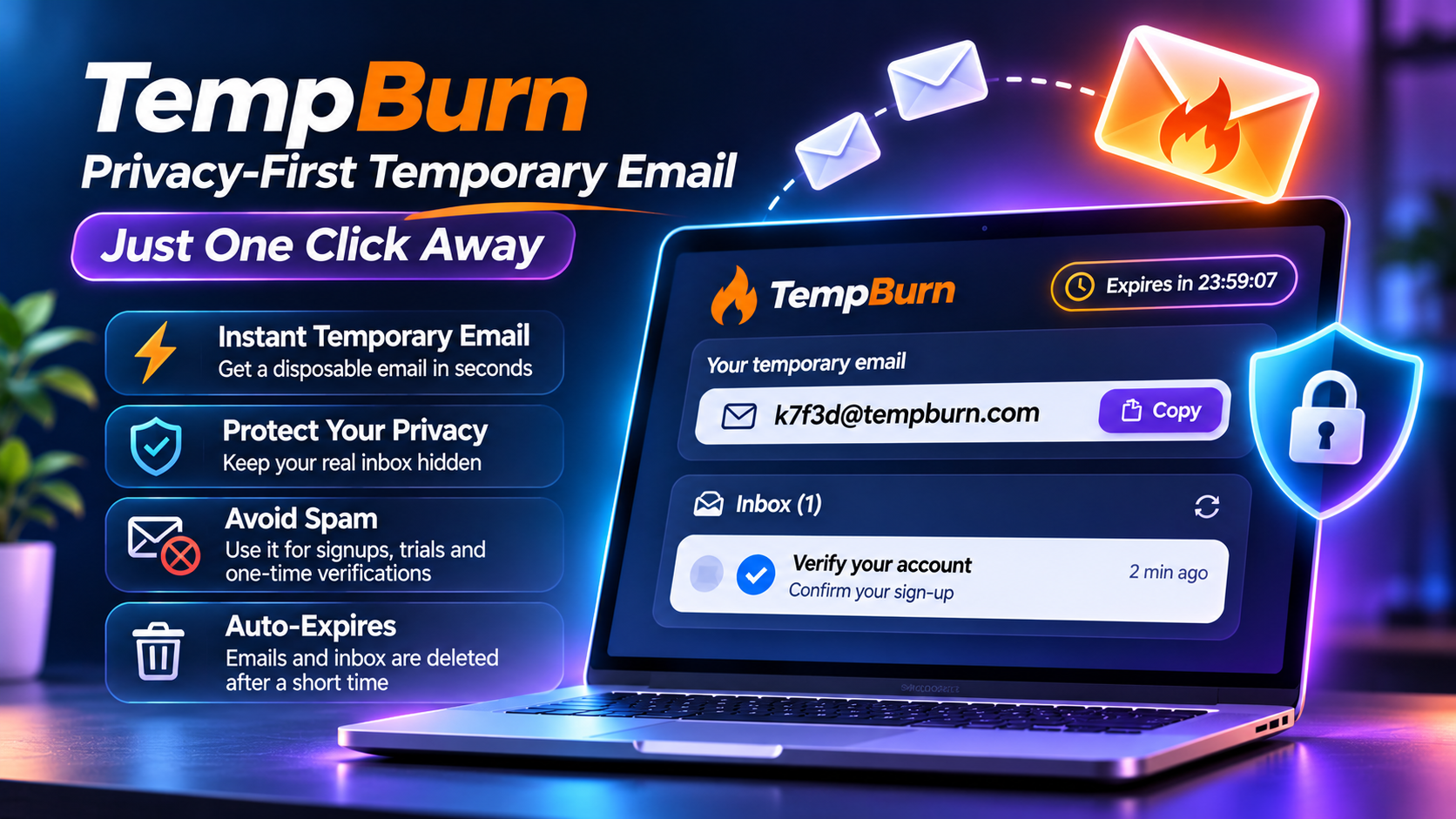
Startup Name: Tempburn
Founded In: 2025
Number of Employees: 1–5
THE IDEA: What problem is your startup/business solving?
THE FOUNDER’S STORY: When and how did you come up with the idea for the business?
The Tempburn Team came up with the idea after noticing how frequently simple signups and verification processes require people to share their personal email addresses, even when they only need the service once.
Existing temporary email services sometimes allow anyone who knows an email address to access its messages. Others automatically load remote images and links, creating potential privacy and security concerns.
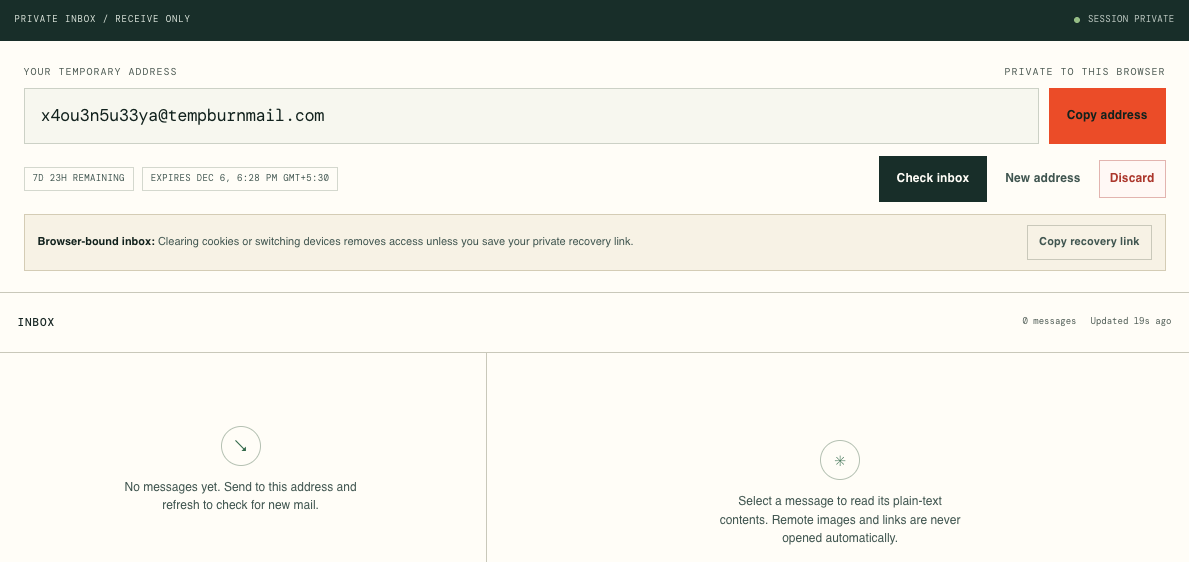
We wanted to build a better alternative: a temporary inbox that users could create instantly, without an account or password, and that would remain accessible only through the browser session that created it.
This vision led to Tempburn. Users simply choose their preferred email address length, click Create Inbox, receive and read emails as plain text, and discard the inbox when they are finished.
WHO IS THE CUSTOMER: What is the typical profile of your target customer?
Tempburn is designed for anyone who needs a temporary email address for one-time registrations, verification codes, or quick inbound email testing without exposing their personal inbox or creating another account.
Our target customers include:
- Privacy-conscious individuals: People who want to protect their personal email addresses when signing up for websites and online services.
- Developers and testers: Professionals who need temporary inboxes to test email delivery, verification codes, and email workflows.
- Everyday internet users: Anyone who needs a disposable email address for quick, one-time communication or registrations.
Our customers value convenience, privacy, and simplicity. They want a free, fast, and secure temporary email solution without the hassle of creating accounts or remembering passwords.
LESSONS TO SHARE: What 3 key lessons from your startup journey would you like to share with aspiring entrepreneurs?
1. Keep the user experience simple.
If your product is designed to be temporary and disposable, do not complicate it by requiring unnecessary accounts or passwords. Users should be able to access its core functionality instantly.
2. Make privacy a core product feature.
Protecting user information should be part of the product’s foundation. By binding each inbox to the browser session that created it, Tempburn ensures that knowing an email address alone is not enough to access someone else’s messages.
3. Build security into the user experience.
A temporary inbox should not introduce new privacy risks. Displaying emails as plain text without automatically loading remote images or opening links helps reduce tracking and potential security threats.
These three lessons shaped Tempburn into what it is today: a free, one-click temporary email service that prioritizes simplicity, privacy, and security, with inboxes that automatically expire after 8 days or when users choose to discard them.