

The future of AI video belongs to systems that understand that a camera angle is a decision, not just a visual setting.
AI video generation is moving beyond the novelty of turning a text prompt into a short cinematic clip. The next phase is likely to be less about simply generating more footage and more about controlling, reviewing, refining and deciding what should actually make it into production.
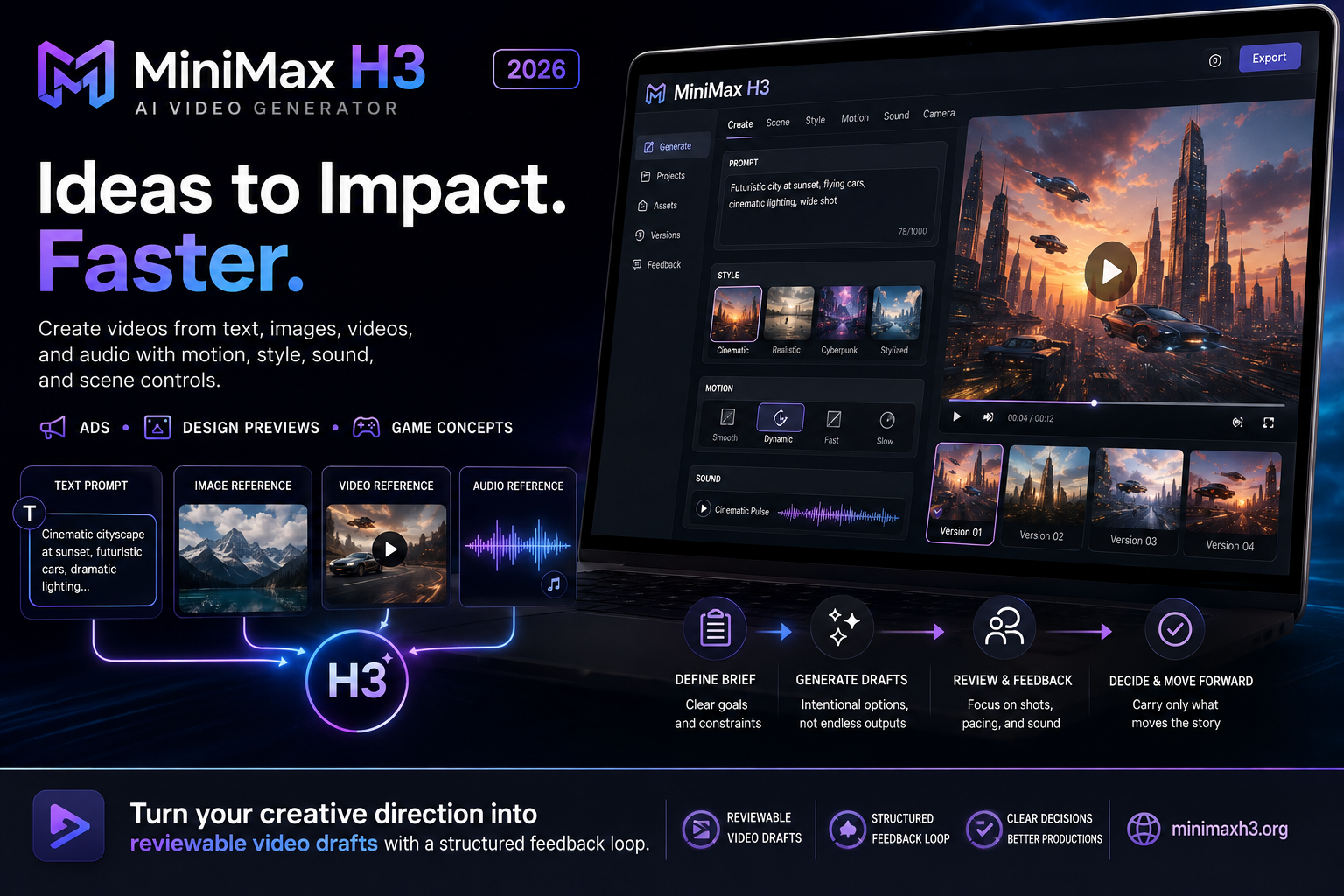
That shift is reflected in the concept behind MiniMax H3 AI Video Generator: helping creative teams move from an initial idea to a reviewable video draft, where stakeholders can discuss concrete choices such as framing, camera movement, pacing, continuity and sound.
NAME OF STARTUP: MiniMax H3 AI Video Generator
FOUNDED IN (Year): 2026
THE IDEA
What is the problem being solved by your startup / business?
Creative teams often lose time between an initial idea and a draft that stakeholders can review. Written briefs leave important production choices open to interpretation, while traditional pre-production can be too slow for rapid concept work.
MiniMax H3 AI Video Generator addresses this workflow gap by helping teams create reviewable video drafts, so feedback can focus on shot continuity, camera direction, framing, pacing, and audio expectations rather than vague creative preferences. The result is a clearer handoff between early exploration and the next production decision.
THE FOUNDER’S STORY
When and how did you come up with the idea for the business?
The product concept is shaped around a recurring production bottleneck: teams need concrete evidence before they can commit budget and editing time, but they also need a disciplined review loop rather than endless generation.
The idea is to create a small number of intentional drafts, compare them against a defined brief, record why rejected options failed, and carry only approved decisions into the next stage. This keeps the workflow useful even when tools or production constraints change.
WHO IS THE CUSTOMER
What is the typical profile of your target customer? Where would they be located?
The typical customer is a small creative team, independent studio, marketer, designer, or product group that needs to communicate a concept before full production. These users may work in agencies, software companies, ecommerce teams, entertainment projects, or distributed content operations.
They can be located anywhere because the workflow is browser based, but the shared need is faster concept validation with clear human review, named constraints, and an explicit decision about what moves forward.
LESSONS TO SHARE
What 3 key lessons from your startup journey you’d like to share with aspiring entrepreneurs?
Three lessons are useful for teams building a creative product.
1. Define the decision the output must support before adding more features.
2. Keep product claims tied to evidence that users can verify on the current website, especially when capabilities change quickly.
3. Design the review process as carefully as the generation step.
Use version names, acceptance criteria, and explicit stop conditions so speed does not create uncontrolled rework. A focused workflow is easier to explain, evaluate, and improve.
STARTUP DETAILS
Website URL: https://minimaxh3.org/
Number of Employees:
1-5
What the Next Five Years Could Look Like
The evolution of AI video can be viewed as five stages:
2024–2026: Generation
Text and images become short video clips.
2026–2027: Control
Creators gain stronger control over motion, camera, references, style and sound.
2027–2028: Production
AI begins connecting storyboards, shots, assets, sound and versions into coherent workflows.
2028–2029: Collaboration
AI becomes a creative collaborator that can generate, critique, compare and refine ideas.
2030+: Creative Systems
AI video becomes part of broader production environments capable of maintaining characters, worlds, brands, narratives and production context across long projects.