

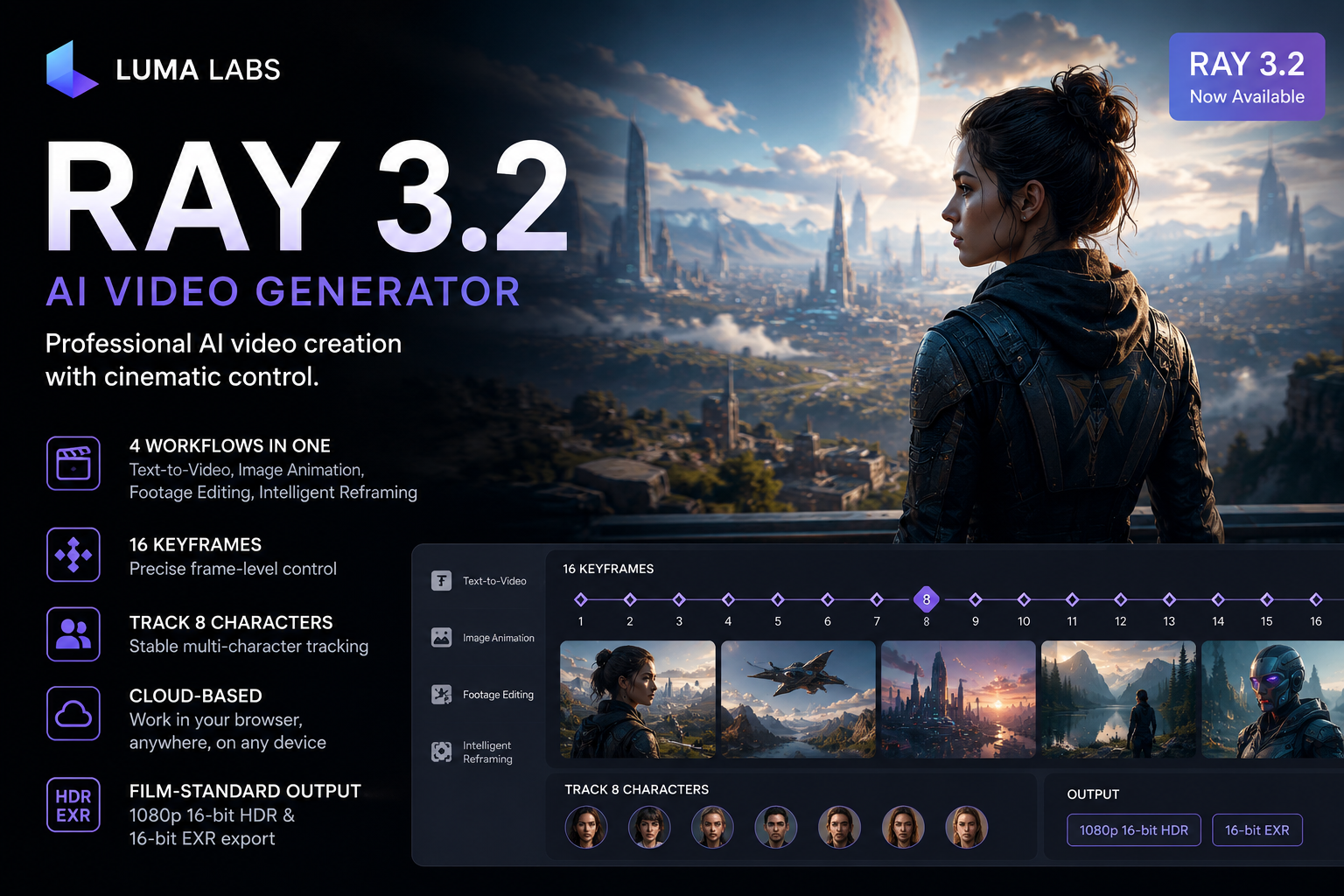
AI video generation is rapidly moving from experimental clips to professional creative production. With creators demanding greater control over characters, scenes, motion and final output, the next generation of AI video tools is focused not just on generating footage, but on making that footage usable within real production workflows.
Ray 3.2 AI Video Generator, introduced by Luma Labs, takes this approach further with a combination of text-to-video generation, image animation, footage editing and intelligent reframing. The platform adds 16-keyframe control, multi-character tracking and professional-grade HDR and EXR output, giving filmmakers, CG artists, advertisers and other creative teams more control over AI-generated footage.
Moving Beyond Basic AI Video Generation
Ray 3.2 aims to give creators more control over the video generation process rather than relying solely on a single prompt and a generated clip.
The platform supports 16 keyframes, allowing users to make detailed adjustments at the frame level. This is intended to provide greater control over how scenes develop and how visual elements change throughout a sequence.
For creators working with multiple characters, Ray 3.2 can also track up to eight characters simultaneously, helping maintain more consistent facial features and body movements while reducing issues such as facial or limb distortion.
Four Video Workflows in One Platform
Ray 3.2 brings four core workflows together:
- Text-to-video for creating video clips from written prompts
- Image animation for turning still images into moving sequences
- Footage re-editing for modifying existing video content
- Intelligent reframing for adapting content to different aspect ratios
By combining these capabilities, the platform is positioned as more than a conventional AI video generator. It is designed to support different stages of the creative production process from a single cloud-based environment.
Designed for Professional Creative Workflows
One of Ray 3.2’s key differentiators is its focus on professional production requirements.
The platform operates through cloud browsers, removing the need for creators to depend entirely on local hardware for their AI video workflows.
Ray 3.2 can generate 1080p 16-bit HDR video and export 16-bit EXR sequences, giving professional users access to formats intended for post-production workflows.
The exported assets are designed to work with established creative tools including Blender, DaVinci Resolve and Nuke, making the platform potentially useful as part of a broader production pipeline.
More Control Over Characters and Scenes
Maintaining consistency remains one of the biggest challenges in AI-generated video.
Ray 3.2 addresses this through its multi-character tracking capabilities and frame-level controls. Creators can work with up to eight characters within a sequence while using keyframes to make more precise visual adjustments.
The platform also includes capabilities such as scene rework, motion transfer and character editing, giving creators additional options for refining generated footage instead of repeatedly starting from scratch.
Who Is Ray 3.2 For?
Ray 3.2 is built primarily for professional and commercial creative users.
Its target audience includes:
- Filmmakers and production teams
- CG artists
- Advertising agencies
- Game developers
- Video creators
- Previsualization teams
- Commercial short-film producers
- High-volume short-video production teams
For these users, the ability to generate, edit and reframe video while maintaining greater control over individual frames could make AI video more practical for real-world production.
From AI Generation to Production Pipeline
Another notable component is Ray 3.2’s commercial API, which allows businesses and production teams to integrate its capabilities into their own workflows.
This could make the technology useful beyond individual creators, particularly for teams producing large volumes of video or incorporating AI generation into existing creative pipelines.
For example, production companies could potentially use the platform for previsualization, advertising concepts, game cinematics or short-form commercial content before moving assets into established post-production software.
The Bigger Opportunity
The AI video market is increasingly shifting from simply asking, “Can AI create a video?” to asking, “Can AI create footage that fits into a professional production workflow?”
That distinction is important.
Creators need consistency, control, editable assets and compatibility with the tools they already use. Ray 3.2 is built around these requirements, combining AI generation with keyframe control, character tracking, professional output formats and cloud-based production.
With its focus on 16-keyframe control, multi-character tracking, HDR output and EXR export, Ray 3.2 is positioning itself toward creators who want AI video generation to become part of a serious creative workflow.
Startup Details:
Name: Ray 3.2 AI Video Generator
Founded: 2026
Location: New York
Employees: 1-5
Website: ray32.net